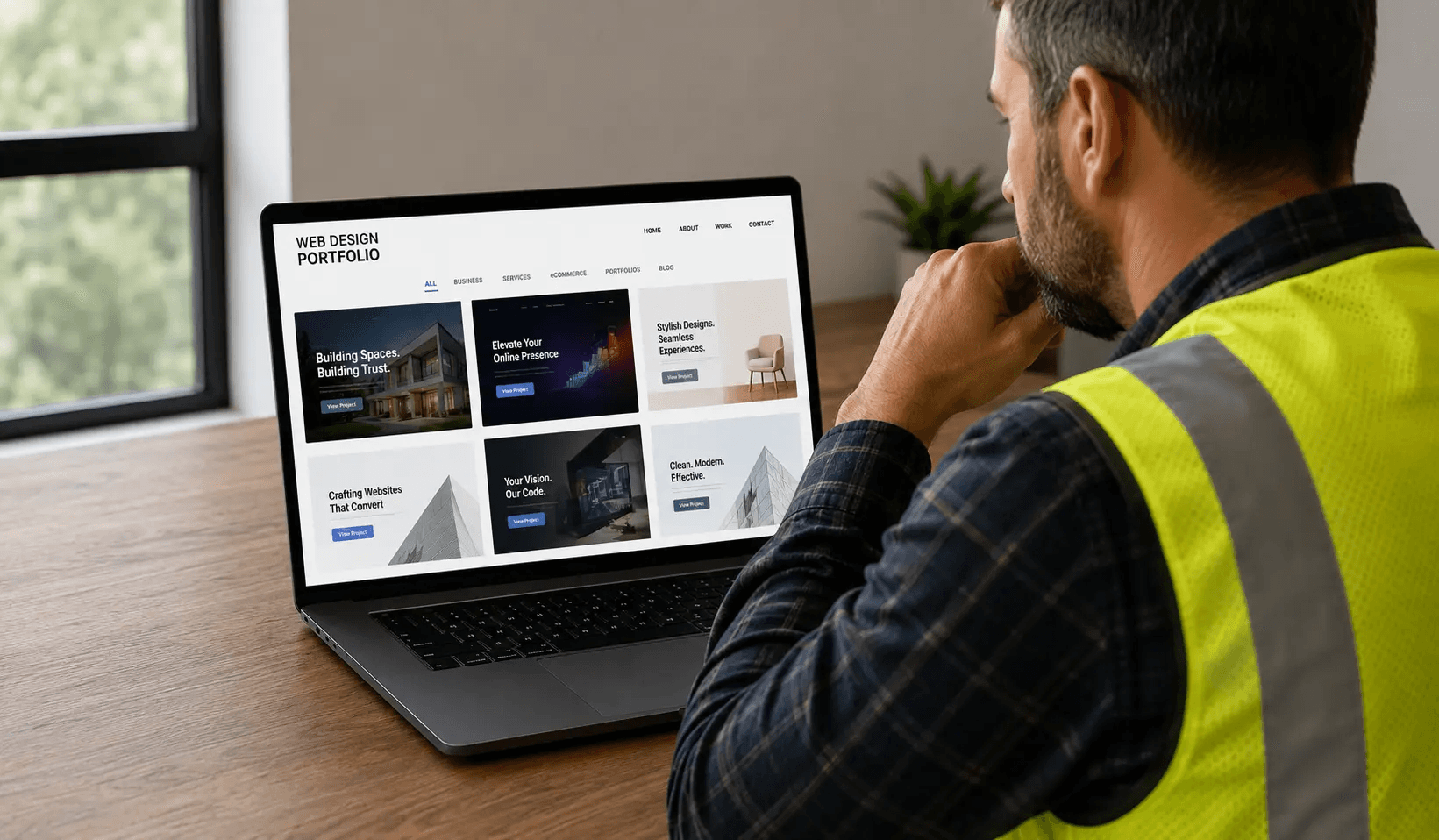
You've decided you need a real website. Good. That's the right call. But now comes the part that trips up a lot of contractors: who do you actually hire to build it?
There are a lot of options out there. Your nephew who's "good with computers." A cheap freelancer on some overseas marketplace. A big agency that mostly works with restaurants and law firms. A do-it-yourself website builder. They'll all happily take your money, but they won't all get you the same result, and most of them won't get you a site that actually brings in jobs.
Picking the right person or company to build your site matters just as much as the site itself. Here's how to make a smart choice instead of an expensive mistake.
Know What You Actually Want the Site to Do First
Before you talk to anyone, get clear on the goal. A contractor website has one main job: turn people who find you online into phone calls and quote requests. That's it. It's not an art project. It's not a place to show off fancy animations. It's a tool that brings in work.
A lot of contractors start by thinking about colors and logos. That's the wrong starting point. Start with the goal. You want a site that shows up on Google, loads fast, looks trustworthy, and makes it dead simple for a homeowner to contact you. Everything we covered in our post on what makes a contractor website convert should be on your checklist before you hire anyone. When you know what the site needs to do, you can tell pretty quickly whether the person you're talking to gets it or not.
Look for Someone Who Understands Contractors
This is the big one. A web designer who has built sites for restaurants, photographers, and yoga studios does not automatically know how to build a site that gets a roofer more roofing jobs. Contractor websites are their own thing. The way a homeowner shops for a contractor, the trust barriers they have, the importance of service areas and local search, the need for before-and-after photos and reviews. These are specific to the trades.
Someone who works with contractors already knows that a homeowner spending twenty grand on a deck does a background check before they call. They know your site needs service pages for each thing you do. They know local SEO is what gets you found in your town. A generalist designer is going to figure this out on your dime, if they figure it out at all.
When you talk to a potential designer, ask if they've built contractor sites before. Ask to see them. If they light up and start talking about lead capture, service areas, and Google reviews, that's a good sign. If they start talking about how "visually stunning" they can make it, keep looking.
Look at Their Past Work
Any designer worth hiring has a portfolio. Look at the contractor sites they've built. But don't just look at whether they're pretty. Look at whether they'd actually work.
Pull the sites up on your phone, since that's where most of your customers will be. Do they load fast? Is the phone number easy to find and tappable? Can you tell within a couple seconds what the business does and where? Is there an obvious way to request a quote? Are there real photos and reviews? A site can look slick and still fail at all of these. You're looking for sites built to generate leads, not just sites that look nice in a portfolio.
If you can, reach out to one or two of their past clients and ask how it went. Did the site actually bring in more calls? Was the designer easy to work with? Did they disappear after the site launched? A quick phone call to a real customer tells you more than any sales pitch.
Ask Who Handles It After It's Built
This is where a lot of contractors get burned. A designer builds the site, hands it over, takes the check, and vanishes. Six months later you need to update your hours or add a new service and you have no idea how, and the designer isn't returning calls.
A website is not a one-time thing. It needs hosting, updates, security, and occasional changes. Before you hire anyone, ask what happens after launch. Do they host it? Do they maintain it? What does it cost to make changes? Is there ongoing support, or are you on your own?
The best setup for most contractors is a done-for-you arrangement where someone handles the building, the hosting, the updates, and the tech, so you can stay focused on the actual work. You didn't get into your trade to learn how to manage a website. Make sure whoever you hire keeps it that way.
Be Careful With the Cheapest Option
Price matters, especially for a small business. But the cheapest option is rarely the best value, and sometimes it's the most expensive in the long run.
A two hundred dollar site from an overseas freelancer might look fine, but if it doesn't show up on Google, doesn't work on phones, and doesn't bring in a single lead, you didn't save money. You wasted it. A site that costs more but brings in even one or two extra jobs a month pays for itself many times over. We broke down this math in our post on the real cost of not having a website, and the same logic applies to having a cheap one that doesn't work.
That doesn't mean spend the most you can. It means think about value, not just price. What's the site going to do for your business? A slightly higher cost for a site that actually generates work is a far better deal than a bargain site that just sits there.
Watch for These Red Flags
A few warning signs that should make you think twice about a designer.
They only talk about looks. If the whole conversation is about how beautiful and modern they'll make it, and never about getting you found or getting you leads, they're thinking like an artist, not a marketer. Pretty doesn't pay the bills.
They can't explain how you'll show up on Google. If you ask about SEO and local search and you get a vague answer, that's a problem. Getting found is half the point of having a site. They should be able to explain it in plain language.
They lock you out of your own site. Make sure you own your domain and your site. Some shady operators build your site on their platform and hold it hostage so you can never leave. Your domain and your content should always be yours.
They overpromise. Anyone who guarantees you'll be number one on Google in a week is lying. Real SEO takes time. Honest designers set realistic expectations instead of telling you what you want to hear.
They're hard to reach before you've even paid. If they're slow to respond and hard to pin down during the sales process, it only gets worse after they have your money. Pay attention to how they communicate from the very first contact.
Ask the Right Questions
When you're talking to a potential designer, here are the questions that cut through the sales talk and tell you what you need to know.
Have you built websites for contractors before, and can I see them? Will my site show up on Google for searches in my area, and how? Who handles hosting, updates, and changes after the site launches? Do I own my domain and my website? How long until it's live? What happens if I need to make a change six months from now? How does the site actually bring in leads?
The answers will tell you fast whether this is someone who understands your business or someone who's going to hand you a pretty brochure and disappear.
The Bottom Line
The right web designer for your contracting business is someone who understands the trades, builds sites that get found and generate leads, handles the technical side so you don't have to, and sticks around after launch. They care more about whether your phone rings than whether the site wins a design award.
Take your time, ask the right questions, and look at real results, not just pretty pictures. The right choice gets you a site that works for you for years. The wrong choice gets you a nice-looking page that does nothing while you wonder why the phone isn't ringing.
Want to see what a website built specifically for contractors looks like? Check out what we build, or grab a free website audit to see how your current site stacks up.